
Pakistan’s infrastructure is at breaking point. The country is expanding highways, metro systems, and small house projects to keep pace with urbanization and increasing energy demands. The nation’s infrastructure is maintained in a safe and effective state through strong wiring. Best quality wiring minimizes energy losses and prevents costly breakdowns. In today’s infrastructure, connecting economic growth, endurance, and building clients’ confidence is essential.
This article examines the impact of quality wire on Pakistan’s infrastructure development and the role of wiring in enhancing energy efficiency. Because strong & safe wires keep the country moving forward.
Infrastructure development Pakistan 2025
Pakistan is currently working to ensure that the system truly benefits the average person. The Public Sector Development (PSDP) has assigned a trillion rupees to transport, energy, and telecommunication projects, indicating that infrastructure is the backbone of the country’s economic development.
Transportation
- Motorways & Highways: Today, more than 1,100 km of motorways join Karachi and Peshawar.
- Railways: The purpose of the Main Line-1 project is to renovate 1,872 km of track, increasing train speeds and enhancing shipment capacity.
- Urban Transit: Urban traffic jams are being lessened by the Metro bus systems in Lahore, Islamabad, Multan, and Karachi’s Green Line BRT.
Energy
- Hydropower: The Diamer Basha Dam, which is expected to generate 4,500 MW of electricity, is under construction.
- Renewables: Solar and wind projects are expanding because renewables still account for less than 5% of the total energy mix.
- Challenges: Pakistan experiences 20–25% transmission losses, frequent outages, and dependence on imported fuel.
Telecommunications
- Mobile Penetration: From 2025, there were 125 million broadband users and more than 190 million mobile subscribers.
- Fiber Optics: The development of Fiber networks is boosting internet speed, especially in urban centers.
- Digital Economy: Financial technology and e-commerce are developing rapidly, but rural access is still unstable.
Economic Consequences of Power Outages
Analysis of Costs
Power outages are a financial burden. Although Pakistan’s installed capacity is 46,000 MW less than that of other countries, frequent blackouts are caused by poor management. The power outage cost is now more than PKR 206 trillion, which worsens the situation by hindering investment in reliable wires.
Frequency & Duration of Outages
Research shows that blackouts typically last 6–8 hours per day in urban areas and 10–18 hours per day in rural regions, especially during the summer months. Outages frequently exceed 7,000 MW, resulting in complete darkness.
Economic Losses for Businesses
Economic losses in Pakistan are massive. Manufacturing companies lose millions due to interrupted production. Outages result in fewer customers visiting stores and restaurants. It also affects call centres, software houses, and data centres. Small & medium-sized enterprises are the most affected because of the shortage of resources for backup power.
Circular Debt Pakistan 2025
Circular debt is the blood choke on Pakistan’s economy. They stop power production at the back if they don’t get paid. It causes more blackouts, a higher cost of electricity & slower growth. Longer load shedding and higher bills are the results for citizens.
Pakistan’s debt cycle in 2025 is about PKR 2.4 trillion. The debt proceeds to damage the energy sector. Modification is needed in distribution efficiency and control management.
The Role of Quality Wiring in Infrastructure Development
To reduce outages, increase productivity, and guarantee safety, wiring quality is crucial. It offers long-term economic benefits. In Pakistan, investing in wiring quality before use is the real growth.
Importance of Quality Wiring in Reducing Outages
Power outages occur due to poor wiring. Low-quality cables cause power blackouts, overheating, and short circuits. Stable voltage and an even distribution of energy through homes, businesses, and public spaces are made possible by good wiring.
Long-term benefits of investing in strong wiring
Without proper or reliable wiring, even the most innovative projects can collapse. Using quality wires means securing your business growth. Some long-term benefits are:
- Economic Efficiency
- Reliability & Performance
- Safety & Risk Reduction
- Long-Term Development Impact
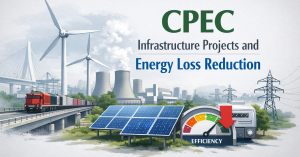 CPEC Infrastructure Projects and Energy Loss Reduction
A long-term collaboration between China and Pakistan, the China-Pakistan Economic Corridor (CPEC) aims to modernise Pakistan’s infrastructure. These projects are designed to minimize power shortages and to connect Pakistan with global trade networks.
CPEC economic impact 2025
CPEC has an impact on Pakistan’s infrastructure economy in terms of trade, networks, transportation, and energy supply. According to the research, Pakistan’s GDP is expected to grow by 2.7% in fiscal year 2025, and CPEC plays a significant role in making this possible. Jobs are generated in logistics, energy, and construction.
Energy Losses Reduction through CPEC
CPEC upgrades high-voltage lines to reduce power loss. In special economic zones (SEZs), reliable power reduces blackouts and improves productivity. These projects help keep the lights on and the power on when it goes out.
Long-Term Benefits of CPEC Projects
- Lower costs
- Economic growth
- Sustainability
- Public trust
The Economic Costs of Sustainable Cables in Pakistan
Sustainable cables are made for durability & efficiency. They cost more in Pakistan compared to normal wires because they are made with high-tech materials and trained workers. When these cables are not installed properly, they cause infrastructure downtime, public inconvenience, and overcost. When Pakistan’s economy employs these lines as a strategic investment, the true benefits of these wires become apparent.
Conclusion
The impact of quality wiring on Pakistan’s infrastructure is unquestionable. Strong wiring becomes the spine of sustainable growth by reducing outages & transmission loss. When the flow of electricity to households and businesses is uninterrupted, the economy benefits. These wires improve outages and deliver long-term benefits. Investing in strong wiring is ultimately crucial to ensuring the growth of your company.
FAQs
Is quality wiring so important for Pakistan’s infrastructure?
Because it helps prevent outages, lower energy losses, and guarantee the safety of your homes, businesses, and public spaces, strong wiring is crucial. It enhances the backbone of infrastructure by keeping the system reliable.
How can poor wiring affect the economy?
Poor wiring can lead to short circuits, downtime, and higher maintenance costs in industries such as production. The client felt less confident as a result.
How does quality wiring connect to CPEC projects?
Quality wiring ensures that power generated reaches industries and households effectively without interruption, reducing losses and increasing economic benefits.
Which impact does quality wiring have on public trust?
When citizens experience minimum outages, safer homes, and trustworthy services, confidence in infrastructure grows. This trust is required for social stability and economic growth.
Does quality wiring offer long-term benefits?
Yes, long-term benefits are:
- Economic efficiency
- Reliability
- Safety
- Growth impact
Is investing in quality wiring be cost-effective for Pakistan?
Yes. While cost is higher, the long-term benefits of reduced repairs, minimum energy losses, and enhanced safety outweigh the initial expense. It is an investment that pays back through efficiency and reliability.